Insurance Documentation Support for Roof Claims in Shreveport, LA
Documentation That Holds Up When a Roof Claim Gets Reviewed
Our role in a roof claim is documentation, not negotiation. We put together a factual, dated record of what happened to the roof, what condition it was in before, and what a repair or replacement actually requires, and we hand that record to you and your adjuster to work with, organized in a way that's easy to follow. We don't promise outcomes on a claim we don't control, and we won't tell you what you want to hear if it isn't accurate. This service sits alongside our broader roof insurance claim assistance work, focused specifically on the documentation piece.
Facilities managers who've been through a roof claim before, whether on this building or a prior one, usually already know the value of good, thorough documentation gathered close to the event itself. What tends to catch owners off guard is how much weight a clear, dated, technically specific record carries compared to a hurried set of phone photos taken the morning after a storm by whoever happened to be on site first, which is the gap we're built to close.
What We Document and When
If we already maintain your roof, we're working from an existing baseline of prior inspection photos and condition notes, which makes post-event comparison straightforward and considerably faster to put together. If we're coming in fresh after a storm without any prior history on file, we document current condition as thoroughly as we can and note clearly where pre-existing wear appears distinct from new, storm-related damage.
Either way, timestamps matter. We date every photo and note the date of the event you're reporting, because a claim built on documentation with a clear timeline holds together better than one with a stack of undated pictures.
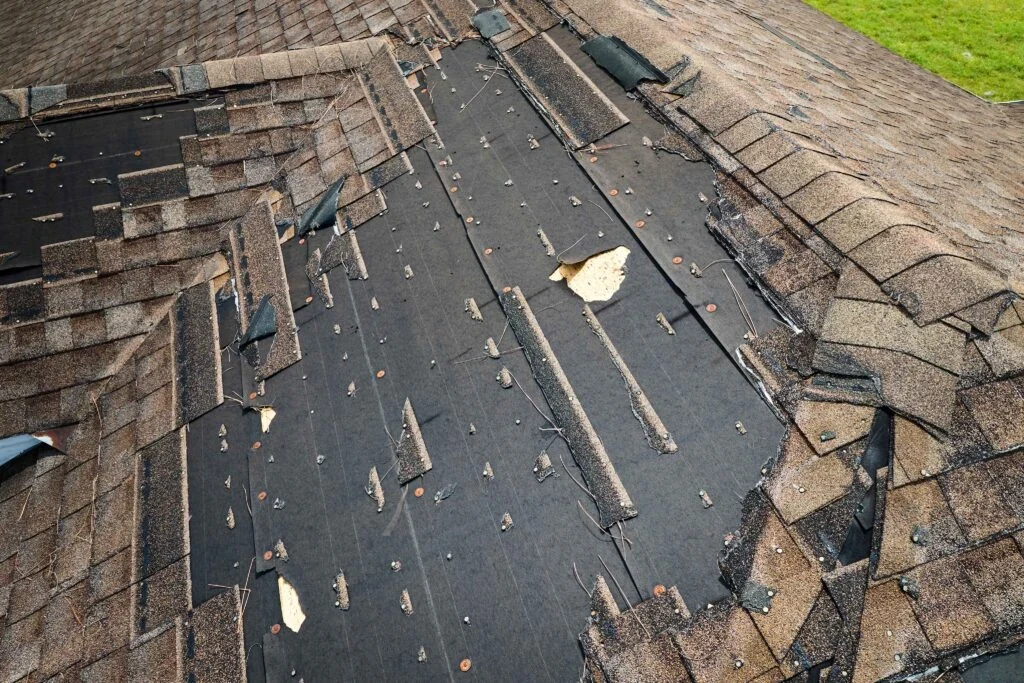
We also keep the documentation specific to the exact roof system actually installed on your building, not a generic description that could apply to any commercial roof. A modified bitumen roof and a TPO membrane fail differently under wind and hail, and a documentation package that describes the damage in terms specific to your actual system reads as more credible than generic language that could describe any roof. That distinction matters most on the events we see most often here: straight-line wind, hail, and the occasional hard freeze or ice event, each of which leaves a different signature on the roof.
What Goes Into the Documentation Package We Hand Off
A complete package gives your adjuster, your property manager, and your own internal records everything needed to evaluate the damage thoroughly, without requiring a second site visit just to confirm basic facts already on record:
- Dated, time-stamped photos of every area of damage
- A roof plan marked with damage locations
- Moisture scan or core sample results where taken
- Prior inspection or maintenance history for context
- A written description of damage, separated from pre-existing wear
- Material and system specifications for the existing roof
- A repair or replacement scope with itemized costs
Working Alongside Your Adjuster Without Overstepping Our Role
We're glad to walk the roof with an adjuster if you want us there, and we'll answer technical questions about the roof system, the specific damage we found, and what a proper, code-compliant repair actually involves. What we don't do is negotiate the claim itself or make any promises about how it will be evaluated or paid. That part of the process belongs to you and your carrier, and we stay in our own lane on the project, which is the roof itself, not the settlement.
We've found this distinction matters to the facilities managers and owners we work with. You need someone who can speak accurately to what happened to the roof and what fixing it requires, not someone making claims about coverage decisions that aren't ours to make. Keeping that boundary clear tends to make the whole process go smoother for everyone involved, including the adjuster.
Why Documentation Before the Storm Matters as Much as After
A claim is a lot easier to support when there's a documented baseline showing what the roof looked like before the event happened, rather than starting the comparison from memory or a vague sense of prior condition. Buildings already on one of our maintenance programs have that baseline sitting in our files already, photographed and dated across prior visits, which usually shortens how long it takes to assemble a complete post-storm package considerably. If you don't have a baseline on file, we can still document current condition thoroughly, we just note that a pre-loss baseline wasn't available.
Questions We Get About Claim Documentation
Do you help us file our claim?
We don't file the claim itself, that's between you and your carrier, but we provide the documentation and technical detail you need to support it.
Will you tell us whether our claim will be approved?
No, we don't make that call and won't promise an outcome. What we can tell you is whether the damage is real, how it happened as best we can determine, and what fixing it requires.
Do you meet with our insurance adjuster on site?
Yes, if you'd like us there, we'll walk the roof with your adjuster and answer any technical questions about the system and the damage.
What if we don't have a baseline inspection on file already?
We document current condition as thoroughly as possible and note that a pre-loss baseline wasn't available, rather than guessing at what the roof looked like before.
How long does the documentation package usually take to put together?
It depends on the size of the roof and extent of damage, but for most buildings we can turn around a complete package within a matter of days after the site visit.