Hail Damage Roof Insurance Claims in Shreveport, LA
Documenting Hail Damage on Shreveport-Bossier Commercial Roofs
Hail season in Ark-La-Tex usually runs spring into early summer, and it doesn't announce itself the way a tornado warning does. A hailstorm can pass through in minutes and leave a commercial roof looking fine from the parking lot while the membrane underneath has bruising or punctures that only show up under close inspection.
We're a roofing contractor, not a public adjuster, so our job after a hail event is to inspect the roof carefully, document what the hail actually did, and build a scope around the real extent of the damage. We don't file claims or negotiate with carriers. We document and substantiate the roof damage so you and your adjuster work from an accurate scope, the same approach we use across our broader roof insurance claim documentation work.
Why Hail Damage Is Easy to Miss
Hail bruising on single-ply membrane often doesn't puncture the surface right away. It compresses the material and weakens it at the impact point, and that weakened spot can fail months later during ordinary weathering rather than during the storm itself. That delay is part of why an inspection soon after a hail event matters, even on a roof that looks undamaged from a quick walk.
- Bruising or soft spots on single-ply membrane, felt more than seen
- Punctures or splits on older, thinner, or already-weathered membrane
- Granule loss or surface damage on modified bitumen or built-up sections
- Dents in rooftop equipment housings, vents, and metal flashing
- Cracked pitch pans or sealant failure around penetrations from impact
Not every hail event causes damage that needs repair. Smaller hail on a newer, thicker membrane frequently causes nothing meaningful, while the same size hail on an older or thinner roof can cause real damage. Hail size alone doesn't tell the story, which is why we inspect rather than assume based on what a hail report says fell in the area.
What a Hail Damage Inspection Actually Involves
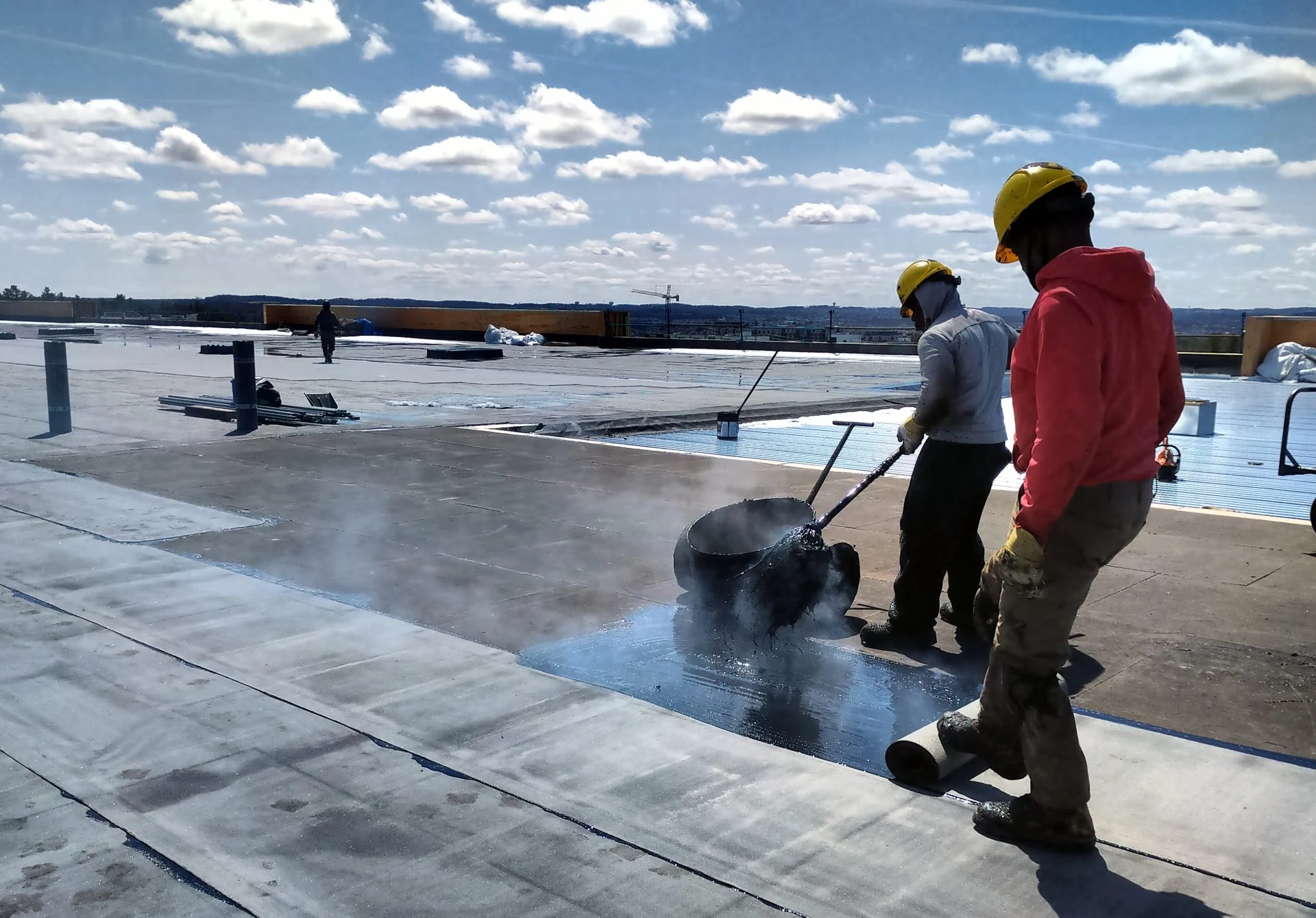
We walk the full roof field instead of sampling a corner of it, since hail impact can be inconsistent across a roof depending on wind direction during the storm and how the roof is exposed. Where bruising is suspected but not obviously visible, we use close inspection and, where warranted, core samples to confirm what's underneath the surface. Every finding gets photographed and dated, and we note the specific roof system so the documentation describes damage in terms that match what's actually installed, not generic language that could apply to any roof. That full package, including moisture readings and core sample results where they're taken, is what our documentation support service hands off to you and your adjuster.
Hail Damage Across Different Building Types
Casino and hospitality roofs along the Bossier riverfront and downtown often carry a mix of roof systems from different renovation phases, so hail impact can look different section to section on the same building. Manufacturing and warehouse roofs off I-20 tend to have large open membrane fields where hail damage can spread across a wide area that's genuinely hard to judge without walking it. Medical buildings and other properties along the Ochsner LSU Health corridor carry more rooftop equipment per square foot, so we pay close attention to curbs, vents, and flashing around that equipment during a hail inspection. If the hail also brought high wind in the same event, which is common with the squall lines that move through here, we document both damage types together rather than treating them as separate claims.
Timing Matters More Than It Seems
Hail-bruised membrane doesn't always fail on a fixed schedule, but leaving it undocumented makes the eventual failure harder to tie back to the storm that caused it. The longer the gap between a hail event and an inspection, the more an insurer or adjuster may question whether the damage came from that storm or from ordinary weathering in the months since. Getting on the roof soon after a hail event, even if nothing looks obviously wrong, gives you a documented baseline close to the actual date of loss.
Hail Damage Claim Questions We Hear Most
How can I tell if my roof has hail damage without climbing up there?
You usually can't tell reliably from the ground. Hail bruising and soft spots on membrane are found by walking and feeling the roof surface, not by looking up at it from a window or the parking lot.
How soon after a hailstorm should we schedule an inspection?
As soon as it's safe to get on the roof. Bruised membrane can weaken further with continued weathering, so an early inspection gives you an accurate baseline close to the event.
Do you provide documentation we can give to our insurance company?
Yes, we photograph and date everything we find during a hail inspection and can put together a documentation package for your adjuster's review.
Will you tell us whether our hail claim will be approved?
No, that call belongs to your carrier. What we can tell you is whether the damage is real, how extensive it is, and what fixing it actually requires.
Can hail damage be repaired instead of replacing the whole roof?
Sometimes, if the damage is limited to specific areas. Widespread bruising across an aging membrane is a different conversation, and we'll be direct with you about which situation you're in.