TPO Single-Ply Roofing in Shreveport, LA
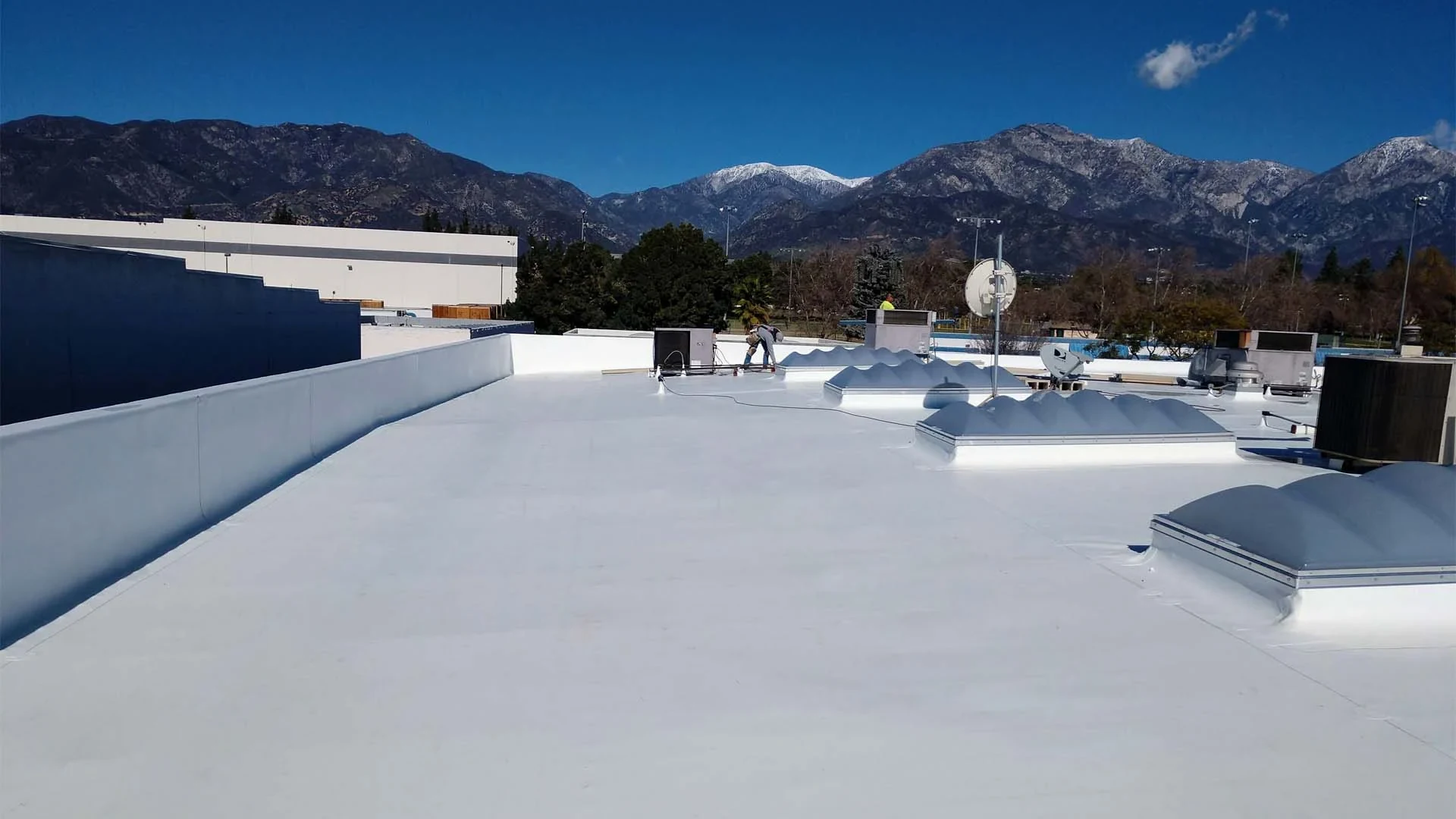
TPO Membrane Roofing for Shreveport-Bossier Facilities
TPO is the single-ply membrane we install most often on distribution buildings and recover projects across Shreveport-Bossier. It's heat-welded at the seams instead of glued or taped, it reflects summer heat off a low-slope roof, and it holds up well over the wide, open field areas typical of warehouse and manufacturing buildings out along I-20.
Why TPO Works Over Aging Built-Up Roofs
A large share of our TPO work in this market is a recover - new TPO membrane installed over insulation laid on top of an existing built-up roof, rather than tearing the old roof off. If the deck and insulation underneath are dry, this gets you a new watertight surface without the mess and downtime of demolition. We check moisture content across the existing roof first, because TPO installed over a wet substrate just seals a problem in rather than solving it.
For facilities managers working against a capital budget cycle, TPO recover is often the option that gets approved this year instead of getting pushed to next year's request.
TPO on I-20 Distribution and Warehouse Decks
The metal-deck warehouses and distribution centers along the I-20 corridor typically have large, unbroken membrane fields with fewer penetrations than an office or medical building. TPO's reflectivity keeps rooftop surface temperatures down, which matters for buildings with sensitive inventory or climate-controlled space below, and it reduces the thermal load on rooftop HVAC units working overtime through a Louisiana summer.
Wide roof fields also mean fewer seams overall relative to square footage, but the seams that exist need to be welded correctly the first time. A membrane that looks fine from the ground can be hiding a poorly bonded lap that opens up in the next wind event.
Seam Welding and Why Crew Experience Matters Here
TPO seams are hot-air welded, and welding quality is sensitive to humidity, membrane cleanliness, and how the welder handles the heat gun in changing field conditions. Shreveport's humidity swings through the year, so a crew that only works this material occasionally can produce inconsistent welds without realizing it until a probe test finds a cold spot. We probe test seams as we go rather than only at the end of a job, so problems get caught while the crew is still on the roof.
What Goes Into a TPO Recover Over Existing Roof
- Moisture survey of the existing roof to confirm the deck and insulation are dry
- Removal of loose gravel, blistered cap sheet, or other unstable surfacing
- New insulation layer to restore slope and R-value where needed
- Mechanically fastened or fully adhered TPO membrane installation
- Heat-welded seams with probe testing along every lap
- Detail work at drains, curbs, penetrations, and perimeter edge metal
Each of those steps gets photographed, and you get a close-out package that shows the roof at each stage - useful if you ever need to answer questions about warranty coverage down the line.
Membrane Thickness and Wind or Hail Exposure
We spec 60-mil membrane for standard commercial applications and step up to 80-mil on buildings with heavier foot traffic from rooftop mechanical service, or on properties that have taken hail damage before and need better impact resistance going forward. The thicker membrane costs more up front but resists puncture and fatigue better over a fifteen-to-twenty-year service life, which matters if your roof sees regular technician traffic for HVAC or generator maintenance.
Working Around Tenants and Operations During Installation
TPO installation involves heat welding equipment and some odor from adhesives during a fully adhered install, so we coordinate timing with sensitive tenants - a medical suite, a food service operation, a casino floor - the same way we would for any other roof system. Mechanically fastened systems generate less odor and are often the better choice when a tenant below can't tolerate any adhesive smell at all. We'll walk you through which attachment method fits your building before we write the scope.
Most TPO manufacturers offer extended warranty terms, but those warranties come with installation requirements that are easy to miss if a crew isn't paying attention - specific fastening patterns, minimum insulation thickness, and documented seam probe testing at defined intervals. We install to those specifications as standard practice, not as an upsell, because a warranty that gets denied over a missed installation detail does you no good five years into a roof's service life. If you're managing a roof as part of a larger portfolio and need warranty documentation on file for a corporate real estate group or an insurer, we provide the manufacturer paperwork alongside our own inspection photos so both records line up.
Common Questions About TPO Roofing
Is TPO a good fit for a recover over our existing built-up roof?
Usually, yes, as long as a moisture survey confirms the roof underneath is dry. If it isn't, we'll tell you before you spend money on a recover that won't hold.
How long does a TPO installation take on a typical warehouse building?
It depends on square footage, deck condition, and how many penetrations need detail work, but wide-open warehouse fields generally move faster per square foot than a roof crowded with rooftop units and skylights.
Do you offer both 60-mil and 80-mil membrane?
Yes. We'll recommend thickness based on foot traffic, hail history, and how the roof will be used after installation.
Can TPO be installed without shutting down our operation below?
In almost every case, yes. We stage material and schedule loud or odorous work around your operating hours whenever the building requires it.
What's the difference between mechanically fastened and fully adhered TPO?
Mechanically fastened systems use plates and fasteners through the membrane into the deck or insulation; fully adhered systems bond the membrane down with adhesive. We'll recommend one over the other based on wind uplift requirements and tenant sensitivity to odor during installation.