
Roof Drains & Scuppers in Shreveport, LA
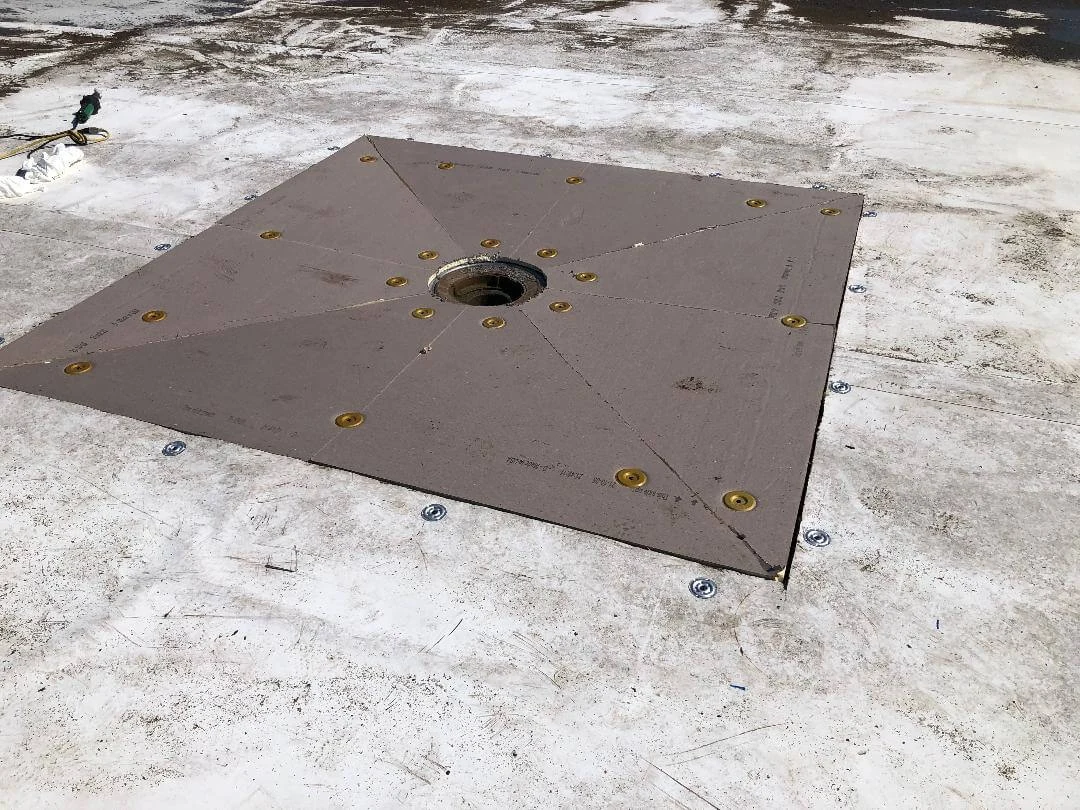
Keeping Roof Drains and Scuppers From Becoming Your Next Flood Call
Drainage is the least glamorous system on a flat roof and the one most likely to get ignored until water is standing where it shouldn't be. We treat drains and scuppers as their own maintenance category, not an afterthought to the membrane, because a roof with a perfect membrane and a clogged drain still floods.
Facilities teams tend to notice drainage only when it's already failing, water pooling somewhere it hasn't before, a ceiling stain that traces back to an overflowing scupper rather than a membrane defect. We'd rather catch a partially clogged drain on a routine visit than get the call after a heavy rain event has already found its way inside.
Internal Drains vs. Scuppers, and What's on Your Roof
Internal drains route water down through the building via interior piping run through the structure itself, while scuppers are through-wall openings that let water discharge directly off the roof edge, usually into a gutter or leader below rather than through the building's interior. A lot of older downtown Shreveport buildings run a simpler drainage layout than current code would require if they were designed today, sometimes with fewer drains serving more roof area than modern standards call for.
Knowing which system your building has, and whether it's actually adequate for the roof's current square footage, is the first question we answer before recommending anything.
Plenty of buildings run both systems together, interior drains as the primary path and scuppers as overflow protection if the interior drains ever get overwhelmed or clogged during a heavy rain event. Knowing which role each opening plays on your specific roof matters, because a scupper that's been mistaken for decorative or unused can end up sealed off by a past repair, removing the exact backup protection it was there for.
What We Check on Every Drain and Scupper Visit
Drainage problems are usually preventable long before they cause an interior flood call, which is why this is one of the more consistent, unglamorous parts of any maintenance visit we run:
- Drain bowl and strainer basket clear of debris
- Overflow scupper height set correctly against the roof deck
- Drain leader lines clear down to grade or the storm system
- Scupper flashing and through-wall seal intact
- Ponding depth and duration checked after a rain event
- Drain count adequate for the roof's current square footage
- Secondary or overflow drainage present as required by code
Ponding Water: When It's Cosmetic and When It's a Structural Problem
A little standing water right after a hard rain is normal on most flat roofs and clears within a day once drains are functioning properly and the roof has any reasonable slope to it. Water still standing 48 hours after rainfall stops is a different situation, and it's worth taking seriously, both because standing membranes degrade faster under constant moisture exposure and because sustained ponding adds real weight that a deck wasn't necessarily designed to carry indefinitely, especially on an older building.
We track ponding location and duration across visits so we can tell you whether it's a one-time drainage hiccup or a recurring pattern that points to a slope or drain-capacity problem underneath.
The heaviest rain events in this region, whether from a slow-moving spring system or the tail end of a Gulf storm pushing up along I-20, are exactly when marginal drainage gets exposed. A roof that drains fine during routine rain can still pond for days after a multi-inch event if the drain count or slope was never quite adequate to begin with.
Undersized Drainage on Older Buildings
Buildings built to older code standards sometimes have fewer drains than current code would require for the same roof area, and that gap becomes obvious during the heaviest rain events this region sees, particularly when a slow-moving spring system or a tropical remnant drops several inches faster than an undersized system was ever designed to move it. Adding drainage capacity without a full reroof is possible in some cases, but often the more durable fix is a tapered insulation retrofit during a future reroof project, which lets us correct slope and drainage at the same time instead of treating them separately.
Questions We Get About Drains and Scuppers
How often should drains be cleaned?
At minimum twice a year as part of routine maintenance, with an extra check after any storm heavy enough to wash significant debris onto the roof.
How do we know if we have enough drains for our roof size?
We calculate required drainage capacity against your roof's actual square footage and compare it to what's currently installed, which tells us quickly whether the building is under-drained by current standards.
What causes recurring ponding in the same spot?
Usually a low spot in the original roof slope, a partially clogged drain nearby, or insulation that's settled unevenly over time. We map recurring ponding locations to figure out which of those it is.
Do scuppers need maintenance if we already have interior drains?
Yes, scuppers usually function as overflow protection even on roofs with primary interior drains, and a blocked or damaged scupper removes that backup exactly when you need it most.
Can drainage capacity be added without a full reroof?
Sometimes, depending on the roof's construction, but a tapered insulation retrofit during a future reroof is often the more complete and lasting fix for chronic drainage shortfalls.