Silicone Roof Coating in Shreveport, LA
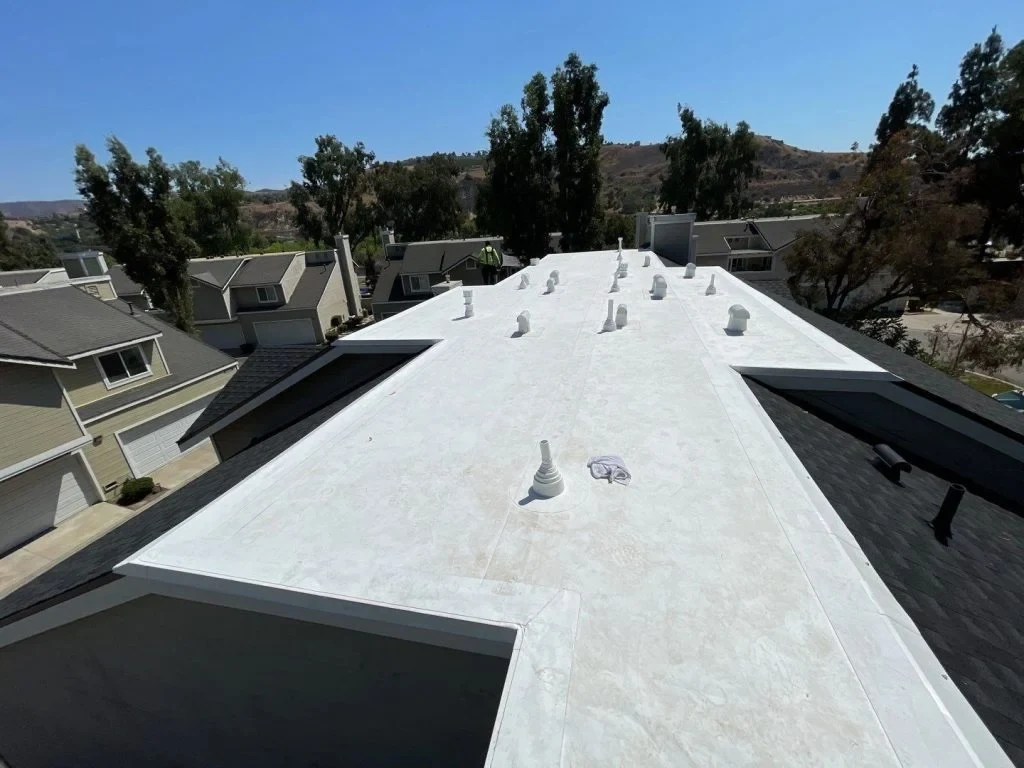
Silicone Restoration Instead of Tear-Off on Aging Shreveport Roofs
A silicone coating restoration is the option we bring up whenever an aging built-up or modified bitumen roof is structurally sound but tired on the surface, and there's a real budget or downtime reason to avoid a full tear-off. It's the most direct answer to a question we hear constantly from FMs managing older buildings in this market: can we buy more years out of this roof without shutting the building down for a replacement project.
Ponding Water and Older BUR Slope Problems
A lot of the older built-up roofs across Shreveport's commercial building stock have slope issues that developed over decades, whether from structural settling, added rooftop equipment changing drainage paths, or a design that was marginal from the start. Standing water accelerates membrane breakdown and, over time, that ponding becomes the roof's biggest liability regardless of what membrane sits underneath it.
Silicone coating handles sustained ponding water better than most alternative coating chemistries, which is exactly why it's the right fit for a roof with a known drainage problem that isn't getting fixed this budget cycle. We're honest that the coating manages the symptom; if drainage can be corrected structurally at some point, that's still the better long-term fix.
No Tear-Off Means No Open Deck Overnight
For a facilities manager, the appeal of a coating restoration goes beyond cost savings; downtime is the bigger factor. A coating project doesn't require opening the deck the way a tear-off does, which means the building stays weathertight every night of the project instead of relying on temporary dry-in protection against an afternoon thunderstorm that showed up ahead of schedule. On an occupied building where tenants are working underneath the roof deck, that's not a minor detail.
We sequence coating work section by section, same as any roofing project, but the risk profile is fundamentally different from a tear-off because there's no exposed substrate at any point in the process.
What a Roof Needs to Qualify for Coating
Not every aging roof is a coating candidate. We core-cut and inspect for wet insulation, membrane delamination, and structural deck issues before recommending silicone over a full replacement. A roof with trapped moisture under the membrane doesn't get better with a coating on top of it; it gets worse, because the coating traps that moisture in place while masking the symptom from the surface.
- Core cuts across the roof to confirm dry deck and insulation
- Ponding water pattern mapped before recommending coating thickness
- Seam and flashing repair completed before any coating application
- Primer and coating applied per manufacturer mil-thickness requirements
- Post-application inspection for coverage gaps and pinholes
Weather Windows for Application
Silicone coating needs a dry substrate and adequate cure time before rain hits it, which is a real scheduling constraint in a region where afternoon thunderstorms are a normal part of the summer forecast. We track weather closely during a coating project and stage sections to match realistic dry windows rather than committing a whole roof to a single day's forecast.
Humidity affects cure time too, which we account for when sequencing multiple coating passes rather than assuming a standard cure schedule applies regardless of conditions.
Extending Service Life Versus Deferring the Inevitable
We're direct with owners about what a coating restoration buys: additional years of service life on a roof that's otherwise sound, not a permanent substitute for eventual replacement. For a building on a five- to ten-year capital horizon, that math often works strongly in favor of coating now and budgeting replacement later, rather than committing full tear-off dollars to a roof that didn't need it yet.
We'll also tell you when coating isn't the answer, particularly if the core cuts come back wet. That's not the conversation anyone wants, but it's the honest one.
Working Around Occupied Hotel and Casino Buildings
A coating project over a hotel tower or casino annex has a different downtime tolerance than an office building, since guest rooms and gaming floors underneath can't tolerate the same noise or odor exposure a vacant warehouse could absorb without complaint. We schedule coating passes around quiet hours where the building requires it and keep application areas clearly marked so maintenance staff and guests aren't walking through wet coating by accident.
Odor from a curing coating is a real consideration in an occupied hospitality building, and we'll talk through low-odor product options with an FM if guest complaints are a bigger concern than a marginal cost difference.
Questions Facilities Managers Ask About Silicone Coating
How long does a silicone coating restoration extend a roof's service life?
It depends heavily on the condition of the substrate underneath and how well ponding and drainage issues are addressed as part of the project, but it's a meaningful extension when the roof qualifies.
Can we coat a roof that already has some ponding water?
Yes, silicone is specifically suited to standing water exposure, which is one of the main reasons it's chosen over alternative coating chemistries in this market.
What disqualifies a roof from coating restoration?
Wet insulation, significant membrane delamination, or structural deck problems found during core-cut inspection. Coating over trapped moisture makes the underlying problem worse, not better.
Does coating work interrupt building operations the way a tear-off would?
No, that's the main advantage. There's no open deck at any point, so the building stays weathertight overnight throughout the project.
How often does a coated roof need recoating after the first application?
That depends on coating thickness, UV exposure, and foot traffic, which is why we build periodic inspection into the maintenance plan rather than assuming a fixed recoat interval.