Warehouse Roofing in Shreveport, LA
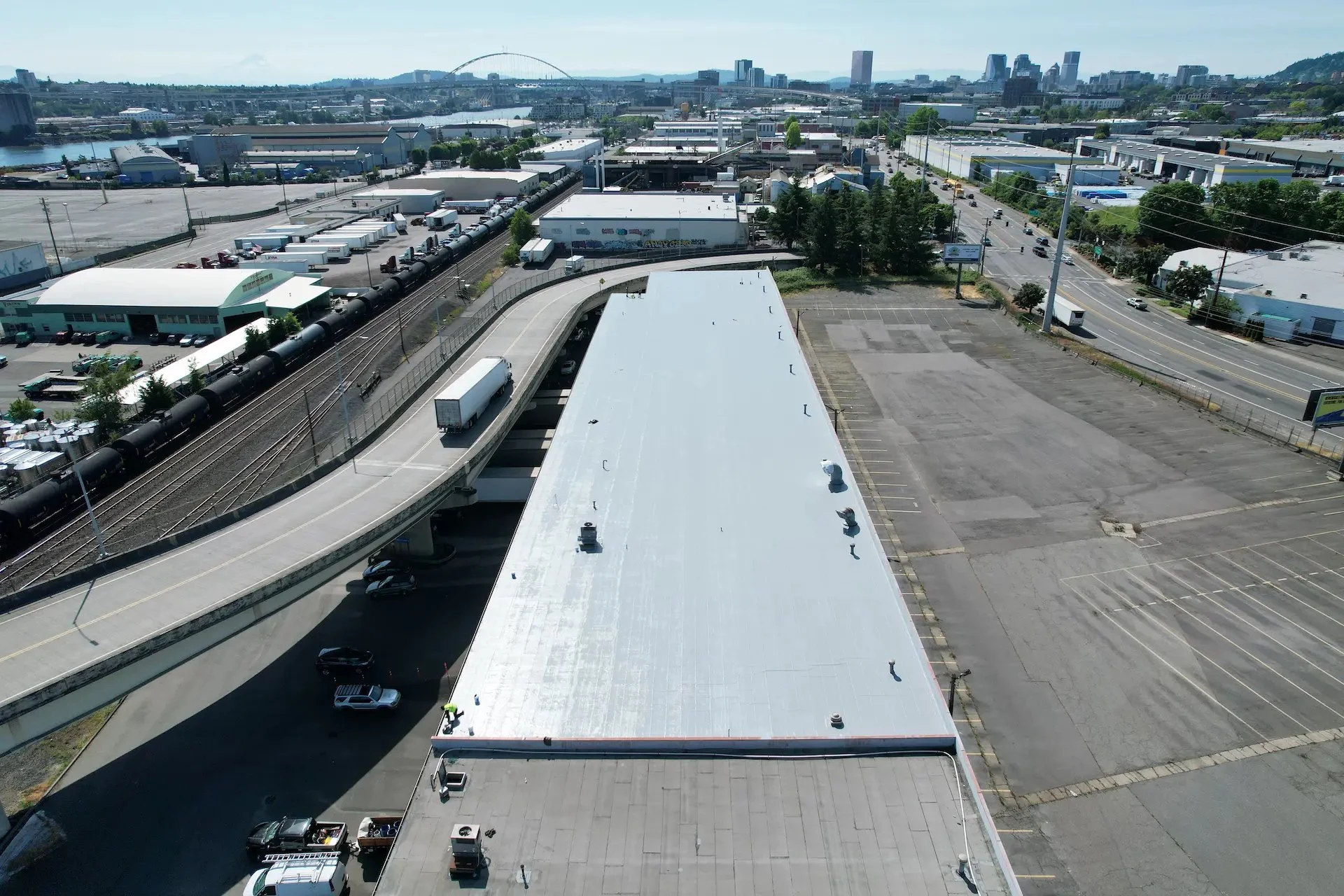
A Warehouse Roof Fails Quietly Until the Racking Below Tells On It
Warehouse stock across Shreveport and Bossier City skews old. A lot of these buildings have already been re-roofed once, sometimes twice, before the current owner ever took title. As the facilities manager, you're watching more than membrane condition. You're watching what's stacked underneath it, because the real damage from a slow leak almost never shows up on the roof first.
The Work Order Behind Every Warehouse Leak Call
A warehouse leak call rarely starts with someone looking at the roof. It starts with a stain spreading across a ceiling tile, a maintenance tech noticing a damp corner of the floor, or a tenant calling in about water near their racking. By the time that work order lands on our schedule, the leak has usually been running for weeks, since a low-slope membrane doesn't announce a small puncture the way a shingle roof announces a missing shingle after a storm.
We don't stop at the reported spot. A rooftop penetration that failed over one rack section often has a matching failure nearby that hasn't worked its way through the insulation yet, so every service call includes a look at the surrounding field, beyond the single point of complaint.
The Mix of Tenants Sitting Under One Roof Deck
Warehouse space in this market carries a wide mix of tenants: regional distribution accounts moving palletized goods through Shreveport-Bossier, parts and materials storage tied to local manufacturing, and increasingly, self-storage-style overflow leased out by the bay. None of that shows up in a roof inspection report, but it drives every decision we make once a leak is confirmed.
A wet ceiling tile over an empty section of floor is an item for the maintenance log. That same water sitting over a tenant's stored product turns into a different conversation fast, one that usually involves the property manager, the tenant's insurance, and a question about how long the roof has actually been letting water through.
Humidity, Ice, and the Two Ends of the Weather Range
This part of Louisiana holds Gulf humidity for most of the year, and that constant moisture keeps membrane seams wet longer than a drier climate ever would, which accelerates seam failure at exactly the joints that are hardest to inspect from the ground. On the other end of the calendar, Shreveport gets hit with ice storms often enough that we plan around them, and freeze-thaw cycling at parapet flashing and rooftop curb penetrations does real, measurable damage over a roof's service life.
Wind adds a third pressure point. A flat, wide-open warehouse roof concentrates uplift force at the corners and perimeter, zones the field of the roof never has to deal with, and an aging mechanically fastened membrane is usually the first thing to give way there when a front comes through.
A warehouse inspection has to cover more than a walk across the field of the roof. On every visit, this is the ground we cover:
- Ponding locations and how long the water's been sitting, read off the staining pattern
- Membrane condition at each penetration, curb, and pipe boot on the roof
- Fastening at the corners and perimeter on any mechanically attached system
- Parapet flashing and the tie-in points where an addition meets the original roof
- Drain and scupper capacity measured against the building's actual roof area
- Interior ceiling and racking stains that point to a leak the roof hasn't shown yet from above
That record does more than support the current work order. If a storm damages the roof down the road, a documented history of prior condition carries real weight in the insurance conversation that follows, and it's a record we build one visit at a time rather than trying to piece it together after a claim is already filed.
Patch, Recover, or Tear Off: What the Deck Actually Decides
Owners and property managers want a clean answer on whether to patch a section, recover the whole roof, or go to a full tear-off, and the honest answer turns on what's happening underneath the membrane, not the membrane itself. If the deck is sound and the insulation underneath is still dry, a roof with a handful of active leaks is usually a solid recover candidate. Once wet insulation shows up across a wide stretch of the roof, recover stops being an option, because sealing new membrane over saturated insulation just locks the moisture in and guarantees a repeat call.
Downtime matters just as much as deck condition. A distribution tenant running two shifts can't afford to have a whole bay shut down for an extended tear-off the way a lightly used storage unit could absorb it, so we break the work into sections and keep the roof watertight over areas that aren't currently being worked. Our roof recover overlay work is usually the starting point when the deck supports it, because it's the option that keeps the most square footage open while work is underway.
Working With Property Management Across a Multi-Tenant Building
Most of the warehouse space we work on in Shreveport-Bossier is leased to more than one tenant under a single roof deck, so access and responsibility questions come up before the actual repair does. We coordinate scheduling directly with property management, protect each tenant's stored goods during active work, and put findings in writing clearly enough that nobody has to guess whose lease covers what when a repair bill comes due.
Answers We Give Shreveport-Bossier Property Managers Most Often
How often does a warehouse roof around here need an inspection?
We recommend two scheduled inspections a year, and we add a walk-through any time the area takes a hard hit from wind, hail, or ice, since Shreveport sees all three in a normal year and none of them wait for the calendar.
Can the warehouse keep running while we recover the roof?
Almost always. We stage the work bay by bay so tenants underneath aren't shut down all at once, and any area storing product that can't get wet gets extra protection or gets moved before we start on that section.
What's the mistake you see property managers make most on these roofs?
Logging a slow leak as low priority because the building still looks fine from the parking lot. By the time a stain reaches the racking or the stored product, the insulation above it has usually been wet for months already.
Does a standing-seam metal roof hold up better than membrane on a warehouse?
Standing seam sheds ice and wind-driven rain well and resists puncture from foot traffic, but it's harder to repair in one small area without pulling panels on either side of the damage. Membrane can be patched section by section without touching the rest of the roof, which counts for more on a building where a full shutdown isn't an option. Neither system is the automatic right answer, it depends on how the building gets used underneath it.
Is coating an aging warehouse roof actually worth it?
It can be, if the deck and insulation underneath are dry and sound. A coating buys real years on a roof that's otherwise holding up, but it won't fix wet insulation or a failing deck, and putting one down over either just hides the problem for a while.