
Sika Sarnafil Roofing Systems in Shreveport, LA
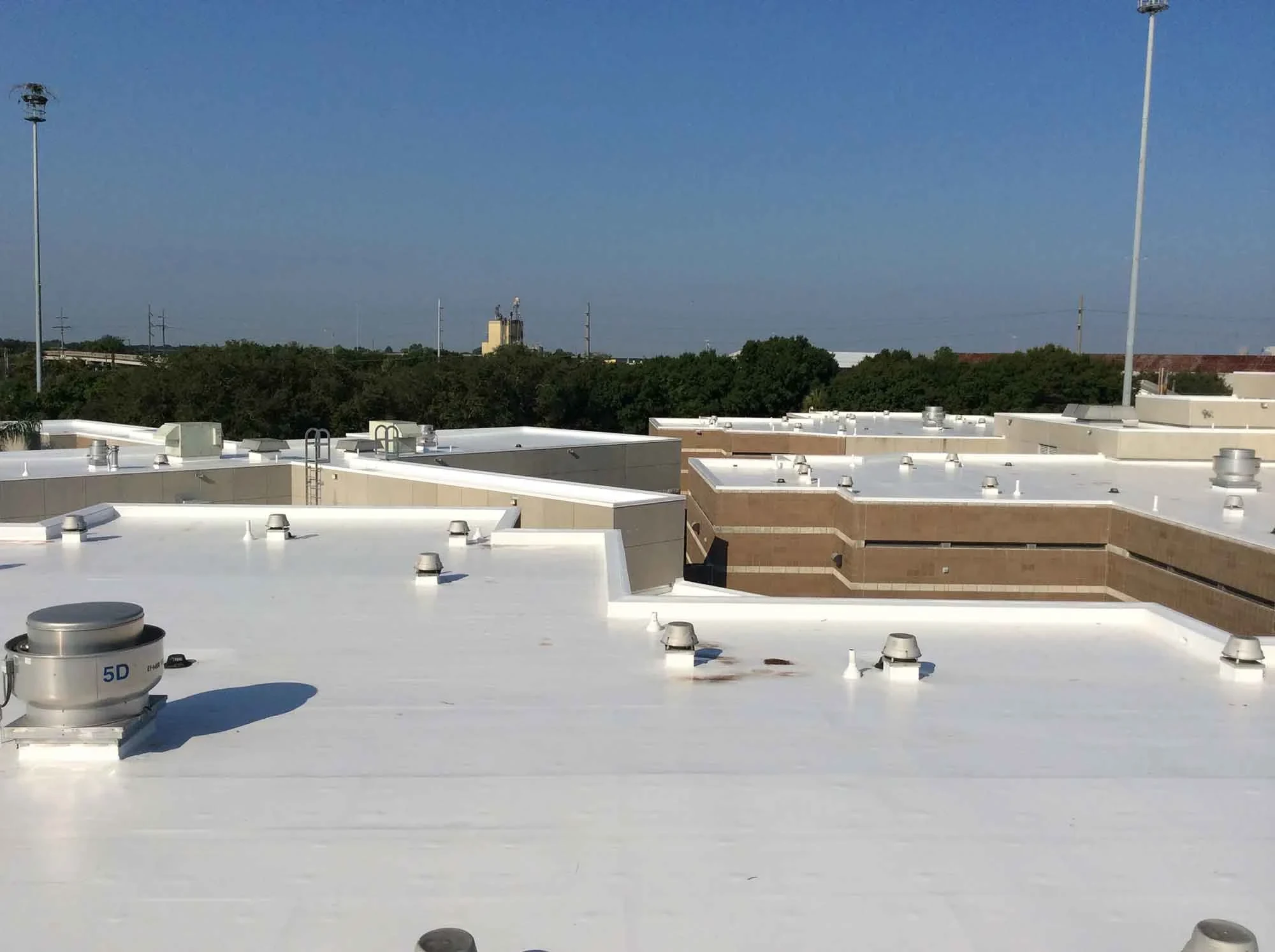
Sika Sarnafil PVC Systems on Shreveport-Bossier Roofs
Sika Sarnafil is a PVC membrane line we turn to specifically when a roof's chemical or grease exposure calls for that membrane chemistry over TPO or EPDM. That describes a meaningful slice of the Shreveport-Bossier market: casino back-of-house kitchen exhaust zones, standalone restaurant roofs, and any building where rooftop chemical exposure is a real factor in membrane selection.
Where PVC Chemistry Earns Its Place
Sarnafil's PVC formulation resists grease, oils, and certain cleaning chemicals better over time than TPO or EPDM does, which matters directly at the seams and membrane surface downwind of kitchen exhaust discharge. We map exposure zones on a given roof before recommending Sarnafil specifically, because a building without concentrated chemical exposure doesn't need the premium this membrane carries over a standard TPO spec.
On properties with multiple kitchen operations feeding a shared back-of-house roof, that exposure is often concentrated in specific zones rather than spread evenly, and we'll spec PVC only where it's actually needed rather than defaulting to whole-roof coverage.
Sika's broader business runs well beyond roofing membrane, into construction chemicals and building materials generally, and the Sarnafil line draws on that chemical formulation background specifically for the weldable PVC compound's resistance properties. That's context worth knowing when a facility's procurement process asks why a roofing bid references a company better known for concrete admixtures elsewhere in its catalog.
Hot-Air Welded Seam Requirements
Sarnafil's installation requirements for seam width, weld temperature, and probe testing follow their published specifications, and we hold to those on every install. Seams under an exhaust discharge path get particular attention, since that's where chemical exposure concentrates and where a marginal weld shows its weakness first.
Grease film on an existing membrane surface changes how future tie-in welds perform, so we clean exposed areas thoroughly before doing any repair or extension weld rather than welding over residue.
Installation Documentation and Warranty Terms
Manufacturer warranty coverage depends on following Sarnafil's specific installation guidelines, and we photograph the install process, seam probe results, and flashing detail to support any future warranty claim. We'll pull the actual applicable warranty terms for a specific project rather than quoting a general assumption, since coverage details vary by product and project scope.
- Exhaust discharge and chemical exposure mapping before specifying PVC zones
- Manufacturer seam width and weld temperature requirements followed exactly
- Grease-exposed seam locations cleaned and prepped before any tie-in weld
- Fan curb and exhaust penetration flashing detailed individually
- Install documentation filed to support warranty claims if needed
Wind and Hail Performance at This Chemistry
Sarnafil's PVC handles the same spring storm wind and periodic hail exposure this region sees about as well as TPO does at comparable thickness, so specifying it for chemical resistance doesn't trade away storm performance. Fastening pattern still gets engineered to the building's wind zone rather than a generic minimum, the same as any membrane we install.
Membrane thickness drives hail-impact resistance at least as much as chemistry does, so we spec thickness based on the same exposure analysis regardless of which manufacturer's PVC is going on the roof.
Cost and Where the Premium Makes Sense
Sarnafil PVC carries a real cost premium over TPO or EPDM, and we don't obscure that in a bid. On a roof with concentrated grease or chemical exposure, that premium buys service life a standard membrane would burn through faster in the same location. On an unexposed roof, it doesn't buy anything extra, and we'll say so rather than push a more expensive system where it isn't earning its keep.
We'll show the reasoning zone by zone on properties with mixed exposure, since it's common to need PVC only where the exhaust load actually lands.
Sarnafil in Institutional and Public Bid Specs
Hospital, government, and larger institutional facilities in this market sometimes name a specific manufacturer's product in a bid specification, and Sarnafil comes up in those specs often enough on PVC-required projects that we keep current product data sheets on hand for that purpose. When a spec calls out Sarnafil by name, we follow the exact installation requirements tied to that specification rather than substituting a comparable product without sign-off from whoever wrote the spec.
Where a bid spec is open to equivalent products, we'll present Sarnafil alongside other qualifying PVC manufacturers so the facility can evaluate on price and terms rather than just the name on the sheet.
We keep the actual submitted spec language on file for any project that named Sarnafil specifically, since a facility's engineer or architect may need that documentation years later for a warranty question or a renovation project touching the same roof section.
Questions Facilities Managers Ask About Sika Sarnafil
Do we need Sarnafil PVC across the whole roof or just the kitchen exhaust zone?
Usually just the exposed zones, based on where exhaust discharge actually lands. We map that before recommending coverage.
How does Sarnafil PVC compare to other manufacturers' PVC in chemical resistance?
Formulation specifics vary between manufacturers, and we'd compare product data sheets for a given project rather than assuming one brand is universally superior.
What warranty terms come with a Sarnafil install?
That depends on the specific product and project scope. We'll confirm the applicable terms for your building rather than giving a blanket figure.
Does PVC need different maintenance than TPO near kitchen exhaust?
Yes, periodic grease-film cleaning near discharge points is worth budgeting for in addition to standard seam and flashing inspection.
Can Sarnafil PVC be installed over an existing membrane without full tear-off?
Sometimes, if the existing deck and insulation are dry and sound. We evaluate that with a core cut before recommending a recover over full replacement.